

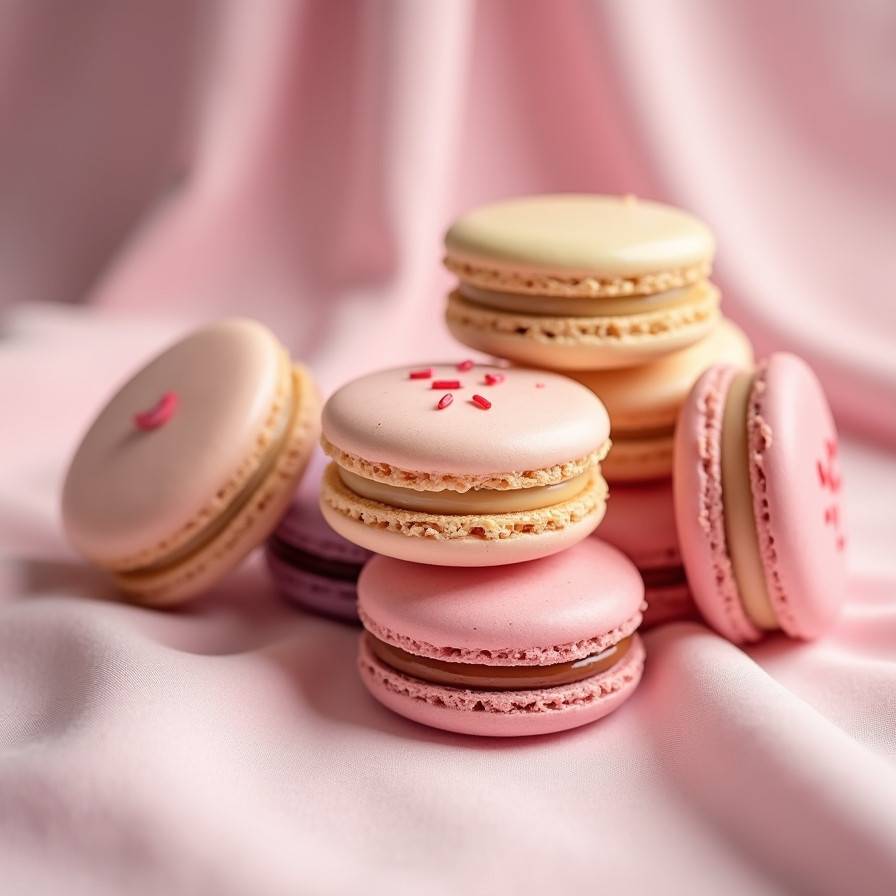
Macarons are delicate, airy French cookies that consist of crisp shells with a soft, chewy interior, sandwiched together with a flavorful filling such as buttercream, ganache, or jam. Known for their elegant appearance and vibrant colors, macarons are a symbol of French patisserie and are perfect for special occasions, gifts, or simply indulging in a refined sweet treat. Despite their reputation for being challenging, with the right technique, these cookies are incredibly rewarding to make at home.
What makes macarons special is their light, airy texture combined with the richness of the filling. Each bite offers a delicate crunch followed by a melt-in-your-mouth center. Their versatility allows for countless flavor combinations and beautiful presentation, making them both visually stunning and delicious.
Why I Love This Recipe
I love this recipe because it captures the classic French macaron experience at home. The shells are crisp on the outside and tender on the inside, while the filling adds a burst of flavor. The process of making macarons is both a challenge and a joy, and seeing the finished, perfectly piped cookies is incredibly satisfying. The endless possibilities for fillings and colors make it a fun and creative baking experience.
Why This Is a Must-Try Dish
This is a must-try dish because macarons are a quintessential French dessert that combines elegance, flavor, and texture. They impress at parties, make thoughtful gifts, and are a delightful treat for anyone who enjoys refined desserts. Learning to make macarons also improves baking skills and introduces precision and technique in patisserie.
Preparation Time, Cooking Time, Servings, and Nutrition
Preparation Time: 30 minutes
Resting Time: 30–60 minutes (for macaron shells to form a skin)
Cooking Time: 15–20 minutes
Total Time: 1 hour 15 minutes
Servings: Approximately 24 macarons (12 sandwich cookies)
Calories: Approximately 90 calories per macaron (without filling, varies with filling type)
Course: Dessert
Cuisine: French
Ingredients
For the Macaron Shells:
Almond flour
Powdered sugar
Egg whites (aged if possible)
Granulated sugar
Salt
Food coloring (optional)
For the Filling:
Buttercream, ganache, or jam (flavor of your choice)
Cooking Directions
Sift almond flour and powdered sugar, whip egg whites to stiff peaks, fold dry ingredients into meringue, pipe onto baking sheet, rest until skins form, bake, then fill with your choice of filling.
Step-by-Step Preparation Method
Step 1: Preheat the oven to 150°C and line baking sheets with parchment paper or silicone mats.
Step 2: Sift almond flour and powdered sugar together to remove lumps and create a fine mixture.
Step 3: In a clean, dry bowl, whip egg whites with a pinch of salt until foamy, then gradually add granulated sugar, whipping until stiff, glossy peaks form.
Step 4: Add food coloring to the meringue if desired.
Step 5: Gently fold the dry ingredients into the meringue using a spatula, performing a folding motion to avoid deflating the mixture. The batter should flow like lava and form ribbons when lifted.
Step 6: Transfer the batter to a piping bag fitted with a round tip and pipe uniform circles onto the prepared baking sheet.
Step 7: Tap the baking sheet gently on the counter to release air bubbles and let the piped macarons rest at room temperature for 30–60 minutes until a skin forms on the surface.
Step 8: Bake in the preheated oven for 15–20 minutes, rotating halfway through for even baking. The macarons are done when they have risen, formed “feet,” and are firm to the touch.
Step 9: Allow the shells to cool completely before removing them from the parchment paper.
Step 10: Pair shells of similar size and fill with your choice of buttercream, ganache, or jam. Press gently to form sandwiches.

How to Serve This Recipe
Serve macarons at room temperature on a decorative platter. They make elegant additions to afternoon tea, dessert tables, or as gifts packaged in boxes.
Recipe Tips
Tip: Age egg whites for 24 hours in the refrigerator to improve meringue stability.
Tip: Sift dry ingredients thoroughly to ensure smooth shells.
Tip: Fold batter carefully to achieve the correct consistency; overfolding or underfolding affects texture.
Tip: Let shells rest before baking to develop a skin for the classic “feet.”
Tip: Use a silicone mat for even baking and easier removal.
Variations
Chocolate Macarons: Add cocoa powder to the almond flour mixture.
Fruit-Filled Macarons: Fill with raspberry, lemon, or passion fruit curd.
Nutty Flavors: Use pistachio or hazelnut flour instead of almond flour.
Coffee Macarons: Add instant coffee or espresso powder to the batter or filling.
Salted Caramel: Fill with homemade salted caramel for a rich flavor.
Freezing and Storage
Storage: Store macarons in an airtight container in the refrigerator for up to 5 days. Bring to room temperature before serving for best texture.
Freezing: Freeze unfilled shells or assembled macarons for up to 1 month. Thaw in the refrigerator overnight or at room temperature for a few hours before serving.
Special Equipment Needed
Mixing bowls
Electric mixer or stand mixer
Sifter or fine mesh sieve
Piping bags and round tips
Baking sheets
Parchment paper or silicone baking mats
Spatula
Conclusion
Macarons are a delicate, elegant dessert that showcases precision, technique, and flavor. With their crisp exterior, chewy interior, and customizable fillings, they are perfect for special occasions or as a sophisticated treat. While they require patience and attention to detail, the resulting colorful, flavorful cookies are worth the effort, making macarons a must-try recipe for any aspiring baker.
Macarons
Macarons are delicate, airy French cookies that consist of crisp shells with a soft, chewy interior, sandwiched together with a flavorful filling such as buttercream, ganache, or jam.
Ingredients
For the Macaron Shells:
For the Filling:
Instructions
-
Step 1: Preheat the oven to 150°C and line baking sheets with parchment paper or silicone mats.
-
Step 2: Sift almond flour and powdered sugar together to remove lumps and create a fine mixture.
-
Step 3: In a clean, dry bowl, whip egg whites with a pinch of salt until foamy, then gradually add granulated sugar, whipping until stiff, glossy peaks form.
-
Step 4: Add food coloring to the meringue if desired.
-
Step 5: Gently fold the dry ingredients into the meringue using a spatula, performing a folding motion to avoid deflating the mixture. The batter should flow like lava and form ribbons when lifted.
-
Step 6: Transfer the batter to a piping bag fitted with a round tip and pipe uniform circles onto the prepared baking sheet.
-
Step 7: Tap the baking sheet gently on the counter to release air bubbles and let the piped macarons rest at room temperature for 30–60 minutes until a skin forms on the surface.
-
Step 8: Bake in the preheated oven for 15–20 minutes, rotating halfway through for even baking. The macarons are done when they have risen, formed “feet,” and are firm to the touch.
-
Step 9: Allow the shells to cool completely before removing them from the parchment paper.
-
Step 10: Pair shells of similar size and fill with your choice of buttercream, ganache, or jam. Press gently to form sandwiches.